
 by
by When you think about NFL superstars, you picture speed, strength, and laser focus.
But what if some of the league’s greatest players achieved that focus while battling something most people see as a disadvantage?
ADHD—Attention Deficit Hyperactivity Disorder—affects millions of Americans, including some of the toughest athletes to ever play professional football.
These NFL players with ADHD didn’t let their diagnosis define them. Instead, they channeled their energy, built routines, and turned what some call a “disorder” into a competitive edge.
Their stories aren’t just about football. They’re about overcoming doubt, finding structure in chaos, and proving that different doesn’t mean less capable.
Whether you’re a parent of a young athlete with ADHD, a fan curious about mental health in sports, or someone living with ADHD yourself, these stories will inspire you.
NFL Players with ADHD
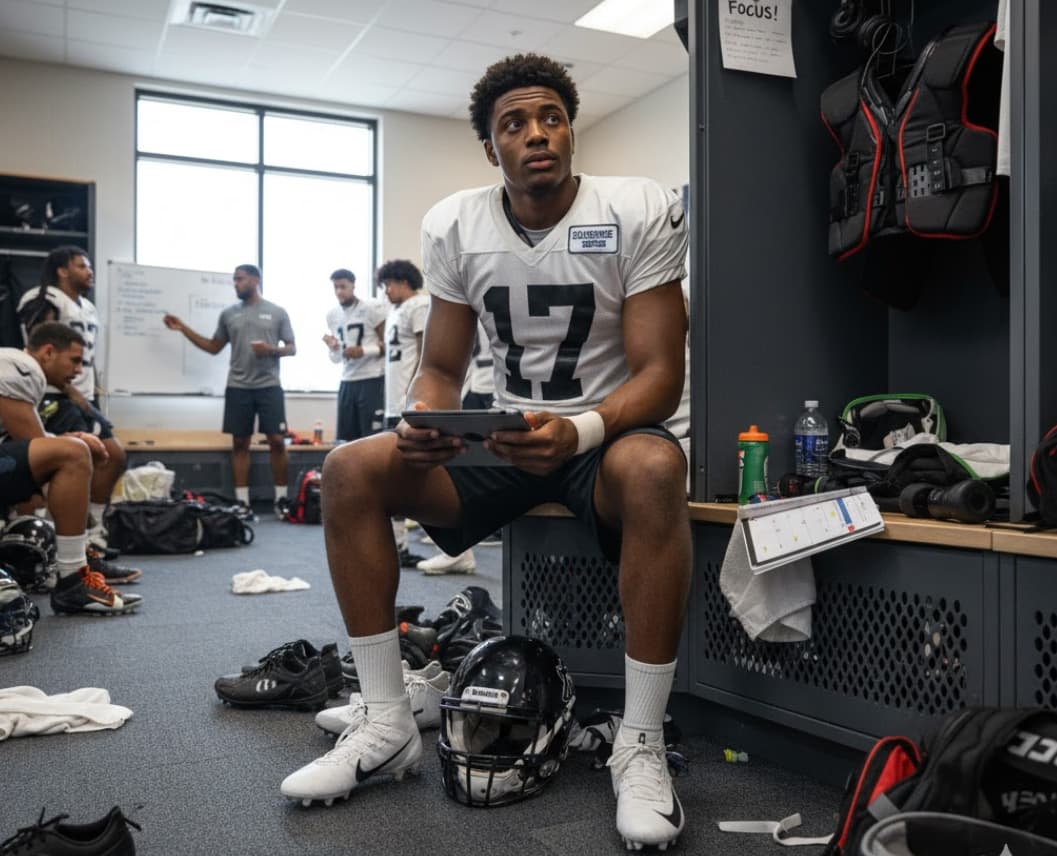
Because here’s the truth: ADHD doesn’t block success in the NFL. Sometimes, it actually fuels it.
What ADHD Means in Sports (And Why It’s Not All Bad)
Let’s start with the basics. ADHD stands for Attention Deficit Hyperactivity Disorder, but that medical term doesn’t capture the full picture for athletes.
ADHD often means difficulty sitting still, trouble focusing on tasks that don’t engage you, and bursts of intense energy that can feel overwhelming.
For kids in a classroom, that’s tough. But on a football field? That high energy and hyperfocus can become superpowers when properly channeled.
Think about it: the ability to hyperfocus during a crucial fourth-quarter drive, the explosive energy that fuels a defensive tackle’s motor, the creative thinking that helps a linebacker read plays others miss – these can all stem from the same brain wiring that causes ADHD challenges in other settings.
Athletes with ADHD aren’t limited to football, either. Famous athletes with ADHD have excelled across virtually every sport.
NBA players with ADHD like Michael Phelps (yes, the swimmer who dominated at Olympic levels), have shown that structure and passion can turn ADHD into an advantage.
Soccer players with ADHD compete at the highest levels internationally.
College athletes with ADHD are succeeding with proper support systems. Even Premier League football players with ADHD are thriving in England’s top soccer division.
The common thread? These athletes found environments where their energy, intensity, and passion for competition could flourish.
They built routines, found supportive coaches, and refused to let a diagnosis limit their dreams.
Now, let’s meet five remarkable NFL players with ADHD who proved that championship football and ADHD can go hand in hand.
Terry Bradshaw: The Hall of Fame Quarterback Who Conquered ADHD and Depression
- Career Stats: 14 Seasons | 27,989 Passing Yards | 212 Touchdowns | 4× Super Bowl Champion
- His Words: “I couldn’t focus, I couldn’t sit still… but football gave me structure.”
Terry Bradshaw is NFL royalty. Four Super Bowl rings. Hall of Fame quarterback. The face of the Pittsburgh Steelers dynasty in the 1970s. But behind those championships was a struggle most fans never saw.
Bradshaw is one of the most famous NFL players with ADHD, though he didn’t receive his diagnosis until after retirement.
According to the Edge Foundation, Bradshaw openly discussed his lifelong battle with ADHD and depression, both conditions he struggled with throughout his playing career, without fully understanding why.
Imagine trying to run complex offensive plays, read defenses, and lead a championship team while your brain constantly pulls you in different directions.
Bradshaw’s intense energy and competitiveness—traits that made him a fierce competitor—were actually symptoms of undiagnosed ADHD.
Football became his outlet. The structure of practice, the intensity of game day, the singular focus required in the pocket – these elements gave his restless mind something to lock onto. His passion for winning channeled his ADHD energy into productive focus.
Today, Bradshaw is a powerful advocate for mental health awareness in sports. He talks openly about ADHD and depression, helping younger athletes understand they’re not alone. His message is clear: struggling doesn’t make you weak. Getting help makes you strong.
Marcell Dareus: The Defensive Force Who Learned Control Through Football
- Career Stats: 121 Games | 365 Tackles | 37.5 Sacks | 2× Pro Bowl Selection
- His Words: “One of the big things about ADHD is learning how to control it. Football helped me do that.”
Marcell Dareus brought chaos to opposing offenses, but growing up, ADHD brought chaos to his own life.
As one of the most physically dominant NFL players with ADHD, Dareus struggled tremendously in school.
His hyperactivity made sitting through classes nearly impossible. Academic work felt like torture when his brain wanted to move, run, hit something.
But on the football field? That hyperactivity became his greatest weapon.
In an NFL interview, Dareus revealed how his ADHD diagnosis helped him understand himself better.
He wasn’t lazy or undisciplined—his brain simply worked differently. Once he understood that, he could develop strategies to channel his energy productively.
Football gave him the structure and physical outlet he desperately needed.
The intensity of defensive line play—exploding off the snap, reading offensive schemes, pursuing ball carriers—required exactly the kind of focused aggression that came naturally to him.
Dareus went on to become a first-round draft pick and a Pro Bowl player.
His ability to maintain motor and intensity for entire games showed how ADHD’s trademark high energy can become a competitive advantage when properly directed.
His story resonates with young athletes everywhere: what others see as hyperactivity might actually be fuel for greatness on the field.
J.T. Thomas III: Diagnosed at 24 and Still Thriving in the NFL
Career Stats: 159 Total Tackles | 4 Forced Fumbles | 2 Interceptions
His Words: “I didn’t know why I couldn’t sit still or zone out sometimes. Once I knew it was ADHD, I worked around it.”
J.T. Thomas III had already made it to the NFL when he finally got answers about why he’d struggled with focus his entire life.
According to Business Insider, Thomas was diagnosed with ADHD at age 24 years after college, while already playing professional football.
Imagine going through high school, college, and the early years of your NFL career without understanding why film study felt impossible, why you’d zone out in team meetings, or why sitting still during long coaching sessions was torture.
The diagnosis was actually a relief. Suddenly, Thomas understood himself better. He wasn’t lacking dedication or intelligence – his brain processed information differently. Armed with that knowledge, he could develop coping strategies.
Thomas worked with team doctors and mental health professionals to create routines that worked with his ADHD rather than against it. He broke film study into shorter sessions.
He took notes during meetings to keep his hands busy and mind engaged. He found ways to make learning work for his brain’s natural wiring.
His journey shows something crucial: even undiagnosed ADHD athletes can succeed at the highest levels. But proper diagnosis and support can take performance from good to great.
Thomas’s story also highlights why discussions about NFL players with ADHD medication and treatment options matter—getting the right support can be life-changing.
Garett Bolles: From Troubled Youth to Elite NFL Tackle
- Career Stats: 120+ Career Starts | 1st-Round Draft Pick (2017) | All-Pro Level Player
- His Words: “I struggled with ADHD, but I learned discipline — and that changed my life.”
Garett Bolles’s story is the most dramatic transformation on this list. His path from troubled kid to elite NFL offensive tackle reads like a movie script.
As reported by AP News and NFLPA features, Bolles struggled severely with ADHD as a child and teenager.
He was expelled from multiple schools due to behavioral issues directly linked to his condition. Authority figures saw a troublemaker. Bolles himself felt lost, unable to control impulses or sit still long enough to succeed academically.
His life could have spiraled completely. Instead, Bolles found mentorship, faith, and the structure of football.
The discipline required to play offensive tackle at a high level—technique, footwork, studying defensive schemes—gave his restless mind a constructive focus.
Learning to manage his ADHD didn’t happen overnight. It required support systems, understanding coaches, and Bolles’s own determination to channel his energy positively. But once he found that discipline, everything changed.
The Denver Broncos selected Bolles in the first round of the 2017 NFL Draft. He’s now one of the league’s most consistent offensive tackles, having started over 120 games and earned recognition as an All-Pro caliber player.
Bolles speaks openly about his journey, hoping to inspire young athletes facing similar struggles.
His message: ADHD and difficult circumstances don’t determine your future. Discipline, support, and refusing to quit determine your future.
Quinn Pitcock: The Advocate Who Found Purpose After Football
- Career Stats: Former Ohio State Standout | Brief NFL Career
- His Words: “I wanted to help others know it’s okay to talk about ADHD and depression.”
Quinn Pitcock’s NFL career was shorter than others on this list, but his impact on mental health awareness in sports has been profound.
Pitcock was a talented defensive tackle at Ohio State who made it to the NFL with the Indianapolis Colts.
But as ESPN reported, the transition from college to professional football amplified his struggles with ADHD and depression.
The structure of college classes, practices, and team activities had provided a routine that helped manage his symptoms.
When that structure changed in the NFL, when life became more independent and isolated, Pitcock struggled to adapt.
After stepping away from football, Pitcock did something courageous: he spoke publicly about his mental health challenges.
He talked about ADHD, depression, and the difficulty athletes face transitioning to life after sports.
His advocacy work has helped countless athletes understand that asking for help isn’t a weakness—it’s wisdom.
Pitcock’s willingness to be vulnerable opened doors for more honest conversations about mental health in locker rooms across professional and college sports.
Today, his legacy isn’t measured in tackles or sacks. It’s measured in the athletes he’s helped through his honesty and the stigma he’s helped break down.
Bonus Profiles: More NFL Players with ADHD
- Peyton Barber – Running Back
Career Stats: 2,457 Rushing Yards | 21 Touchdowns
Peyton Barber was diagnosed with both ADHD and dyslexia in middle school. According to Auburn University Athletics, he used academic accommodations and mental health resources to balance school and sports. His message: “Having ADHD doesn’t make you less. It means you learn differently—and that’s okay.” His success with Tampa Bay and Washington shows how proper support systems help athletes thrive.
- Virgil Green – Tight End
Career Stats: Over 120 Receptions | Super Bowl 50 Champion
Virgil Green reportedly managed his ADHD throughout his NFL career through prescribed medication and structured routines. As noted by the Denver Post, his commitment to mental health helped him maintain consistency across multiple seasons with the Broncos and Chargers. Green’s discipline proves that proper treatment and support allow athletes to compete at championship levels.
What Fans Say: NFL Players with ADHD Reddit Discussions
Online communities have become important spaces for discussing ADHD in sports.
On NFL players with ADHD Reddit threads, fans share stories, ask questions, and celebrate athletes who’ve succeeded despite—or because of—their ADHD.
These discussions break down stigma. When fans see Terry Bradshaw or Garett Bolles succeed with ADHD, it normalizes the conversation.
Parents of young athletes with ADHD find hope. Kids with ADHD see role models who look like them.
Reddit threads also discuss practical topics like accommodation strategies, the role of NFL players with ADHD medication in performance, and how teams can better support neurodiverse athletes.
This growing awareness represents real progress in how sports culture views mental health.
ADHD Across Sports: Football, Basketball, Soccer, and Beyond
ADHD doesn’t discriminate by sport. Athletes across every competition level have thrived with proper support:
- NBA Players with ADHD have reached All-Star status, showing that basketball’s fast pace and constant motion can actually suit ADHD brains well.
- Soccer Players with ADHD compete internationally, including Premier League football players with ADHD performing at England’s highest level. The continuous movement and strategic complexity of soccer provide the engagement that many ADHD athletes crave.
- College Athletes with ADHD receive accommodations like extended test time, note-taking assistance, and flexible tutoring schedules, allowing them to succeed academically while excelling athletically.
The common thread across all sports? Athletes with ADHD often thrive in high-intensity, fast-paced environments. The challenge isn’t the competition—it’s the quieter moments of film study, meetings, and classroom work that require different strategies.
Lessons Young Athletes Can Learn
If you’re a young athlete with ADHD or a parent of one, these NFL stories teach powerful lessons:
- ADHD Isn’t a Limitation—It’s a Difference: Your brain works differently, not worse. The energy and intensity that make sitting still difficult can fuel incredible athletic performance.
- Structure and Routine Are Your Friends: All these NFL players with ADHD found success through structured environments. Create routines for study, practice, rest, and nutrition.
- Get Proper Support: Don’t struggle alone. Work with doctors, counselors, and coaches who understand ADHD. Medication, therapy, and accommodations aren’t cheating—they’re tools for success.
- Find Your Outlet: Football gave these athletes a place to channel their energy productively. Find the activity that does that for you, whether it’s sports, music, art, or anything else that ignites your passion.
- Your Diagnosis Doesn’t Define You: Terry Bradshaw won four Super Bowls with undiagnosed ADHD. Imagine what you can accomplish with proper support and self-understanding.
FAQs:
- Do any current NFL players have ADHD?
Yes, several current and recently active NFL players have been diagnosed with ADHD, including Garett Bolles of the Denver Broncos. Many others likely manage the condition privately.
- How do NFL players manage ADHD during their careers?
Players use various strategies, including prescribed medication, structured routines, mental health counseling, academic accommodations during college, and working with team doctors to develop personalized management plans.
- Can you play professional football with ADHD?
Absolutely. Multiple NFL players with ADHD have had successful, even Hall of Fame careers. With proper support and management strategies, ADHD doesn’t prevent elite athletic performance.
- Did Terry Bradshaw know he had ADHD during his playing career?
No, Terry Bradshaw wasn’t diagnosed with ADHD until after retirement. He played his entire Hall of Fame career without understanding why he struggled with focus and restlessness.
- Are there famous athletes with ADHD in other sports?
Yes, athletes with ADHD have succeeded across virtually every sport, including basketball, soccer, swimming, gymnastics, and more. ADHD doesn’t limit athletic potential when properly managed.
Conclusion: Celebrating Strength, Focus, and Football Success
These NFL players with ADHD prove something important: focus challenges don’t prevent greatness—sometimes they shape it.
From Terry Bradshaw’s Hall of Fame leadership to Marcell Dareus’s defensive dominance, from J.T. Thomas’s late-life diagnosis to Garett Bolles’s inspiring transformation, these athletes show that ADHD and elite football performance aren’t opposites—they can be partners.
The key is structure, support, and self-belief. With proper diagnosis, treatment options when needed, understanding coaches, and personal determination, athletes with ADHD can reach the highest levels of any sport.
Their stories continue inspiring countless young athletes across America who live with ADHD and dream of football glory.
They prove that different isn’t less capable. Different is just different—and sometimes, different is exactly what makes you great.
So if you’re living with ADHD, or if you’re raising an athlete with ADHD, remember these names.
Remember their struggles and their triumphs. Remember that some of football’s greatest champions faced the same challenges you’re facing now.
And they didn’t just survive. They conquered.
